

When we treat taxes as a source of stress and secrecy, we pass that burden directly to our children.
If they don’t understand the system, their first “real world” experience feels like a punishment rather than a contribution. They start their adult lives with a scarcity mindset, viewing the government as an adversary and their finances as a black box they can never quite control. It doesn’t have to be this way. By inviting your children into the conversation early, you replace fear with a manageable tool. Teaching your kids about taxes serves as a masterclass in wealth protection that ensures they grow up knowing exactly how to claim their fair share and protect their future.
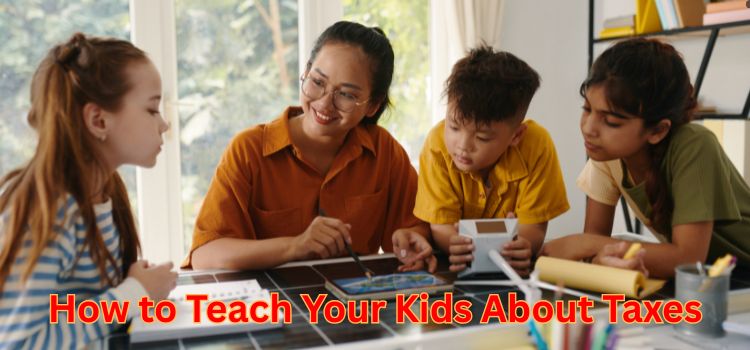
How to explain income tax to a child in Canada
The biggest hurdle in talking to kids about money is its abstract nature. To a child, money is something that comes out of an ATM or exists as a tap on a card.
The idea that a portion of that money must be set aside for the “common good” can be confusing. To bridge this gap, you need to turn the abstract into something tangible.
A great way to start is the “Public Services Tour.” The next time you are driving to hockey practice or walking through a local park, point out the things the government provides. Explain that the clean water in the fountain, the paved roads, and the library books are all paid for by a “community pot” of money. This shifts the narrative from the government “taking” money to the family “contributing” to the community.
For younger children, the “Pizza Tax” remains one of the most effective teaching tools. When you order a family pizza, explain that before anyone takes a bite, one or two slices are set aside for the “community.” While it might feel disappointing to see those slices go, explain that those slices are what make it possible for the pizza shop to have a health inspector, clean water, and safe roads for the delivery driver. By using a physical object like a pizza, you help them visualize that while we don’t get to keep 100% of what we “earn,” the part we give away builds the world we live in.
Understanding gross vs net income for a teen’s first job
If your teenager, excited after their first month working at a local café or camp, opens their pay stub only to realize the $500 they earned has shrunk to $430.
This is the perfect time to introduce the concept of Gross vs. Net Income.
Instead of letting them feel “robbed,” use this as a narrative opportunity. Explain that the “Gross” amount is the value of their hard work, but the “Net” amount is the take-home pay and what actually lands in their bank account.
You can explain that those deductions, like Canada Pension Plan (CPP) and Employment Insurance (EI), are actually safety nets for their future self.

Filing taxes for students with no income in Canada
One of the most common myths circulating among Canadian students is that if you didn’t make any money, you don’t need to bother with the CRA. In reality, filing a tax return when you have little to no income is one of the smartest financial moves a young person can make.
Why? Because filing is how you “unlock” government benefits that are essentially free money. For example, once a student turns 19, the CRA uses their previous year’s tax return to determine if they are eligible for the GST/HST credit. If they don’t file, the CRA assumes they don’t need the help, and those quarterly payments never arrive in their bank account.
Furthermore, filing allows students to track and “bank” their Tuition Tax Credits. Post-secondary education in Canada is expensive, but the tax system offers a massive silver lining. Even if a student doesn’t need the credit to lower their taxes today (because they aren’t earning enough to pay taxes), they can carry those credits forward indefinitely. Ten years from now, when they are in a high-paying career, those saved-up credits could result in a massive tax refund. By teaching your child to file now, you are helping them build a “tax shield” for their future self.
CRA ‘learn about your taxes’ competition 2026
The CRA has introduced a powerful tool specifically for the 2026 school year. The “Learn about your taxes” competition is a national initiative that runs from late January through mid-March. It’s designed to turn tax literacy into a gamified experience for middle and high school students across Canada.
By partnering with platforms like ChatterHigh, the CRA allows students to compete for their share of a $5,000 prize pot for their schools. This is about winning cash and building the “muscle memory” of financial management. Students go through interactive modules that cover everything from why we need a Social Insurance Number (SIN) to how to manage a GST/HST account if they decide to start a side hustle.
As a parent, encouraging your child to participate in these programs does two things.
First, it provides them with a safe, moderated environment to ask questions they might be too intimidated to ask a professional.
Second, it earns them a Certificate of Achievement that looks great on a resume or a university application. It shows potential employers that they are financially literate individuals who understand their responsibilities and their rights.
Conclusion
Teaching your kids about taxes is one of the most significant ways you can “pass on your wealth” without writing a single cheque.
You are giving them the gift of a stress-free future, ensuring they never feel the same confusion or fear that many adults carry into April. When they understand the system, they are strategically building their own foundation. At Bailey’s Tax Services, we specialize in helping Canadian families grow and protect their wealth under Canadian law. You’ve worked hard to build your life; let’s work together to make sure the next generation is ready to lead it.
Meet Patrick

Patrick is a Tax Consultant, Educator, and Founder of Bailey’s Tax Services Inc, a tax advisory practice in Toronto, Ontario, Canada.
He specializes in helping Canadian families & small business owners who are stressed, confused and overwhelmed about their financial state, understand their finances, make smart decisions that move them forward and attain clarity and peace of mind.
He regularly shares his knowledge and best advice here on his blog and on other channels such as LinkedIn and Facebook and through his FREE monthly webinars (Learn to Earn).
Book a call today to learn more about what Patrick and Bailey’s Tax Services Inc can do for you.